


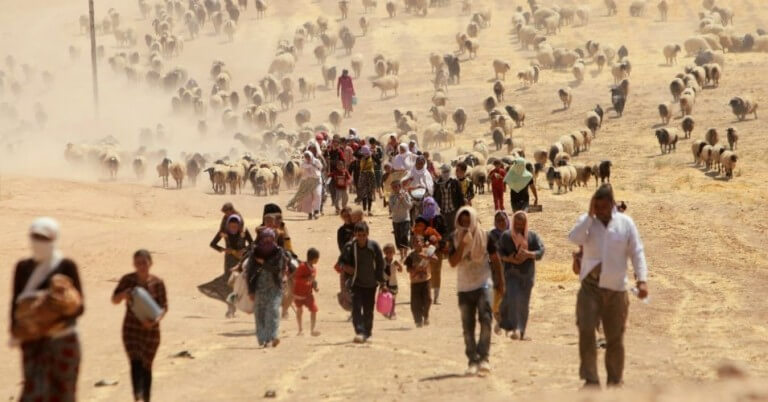
Their first steps start in Refugee Camps set up by the United Nations, normally in neighbouring countries. Here, Syrians are provided with accommodation and basic human aid, though only for a short time. Fortunately the camps usually have hospitals, clinics and schools. But living in a refugee camp does not build independence for the displaced, as they must work and settle in a new country in order to be self-sufficient.
After having been resettled in a host country, they still have an arduous fight ahead. They will need to find a job, a house and get their kids back into the school system. In addition, and in order to achieve this, they will need to learn a new language and adapt to the new culture and habits of their new society. Favourable political policies towards refugees in hosting countries can ease this struggle.
Generally, refugees earn less than native workers and are willing to take up those employments that locals refuse, so their contribution to the labour market can be seen positively. Furthermore, once they have normalized their situation refugees will contribute to the GDP growth in several ways: by paying income taxes, contributing to the social security and by increasing consumption.
Nevertheless, the potential host countries are still reluctant in welcoming large numbers of refugees, hampering the asylum procedures. We really hope that host countries take responsibility and that the bureaucratic process is sped up so these people can start from scratch as soon as possible.